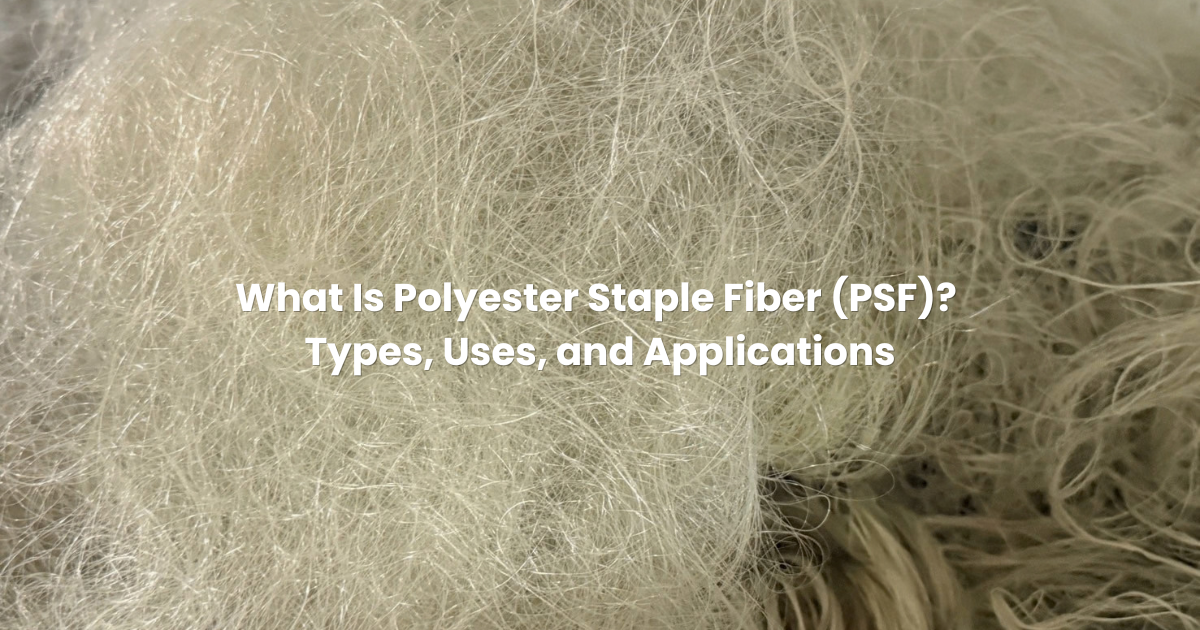
Polyester staple fiber (PSF) is a type of polyester fiber that is cut into specific short lengths rather than kept as continuous filament. It can be produced in different deniers, structures, colors, and finishes to meet the requirements of various industries.
PSF is widely used in pillows, quilts, mattresses, nonwoven materials, carpet felt, geotextiles, insulation, padding, and other filling applications.
Polyester remains the world’s most widely produced fiber. According to Textile Exchange’s 2026 Materials Market Report, polyester represented approximately 59% of global fiber production in 2025.
Polyester staple fiber, commonly known as PSF, consists of polyester fibers that have been manufactured and cut into predetermined lengths.
Unlike continuous filament, which remains as a long, uninterrupted strand, staple fiber is cut into shorter fibers. These fibers can then be processed into filling materials, nonwoven products, felt, insulation materials, and many other products.
The properties of PSF can also be adjusted according to its intended application. For example, fiber structure, denier, length, finish, and color may be selected based on the performance required in the finished product.
Therefore, there is no single PSF specification that is suitable for every application.
The exact manufacturing process varies depending on the raw material, fiber specification, and production technology. However, polyester staple fiber production generally involves several major stages.
Polyester raw materials are first prepared for production.
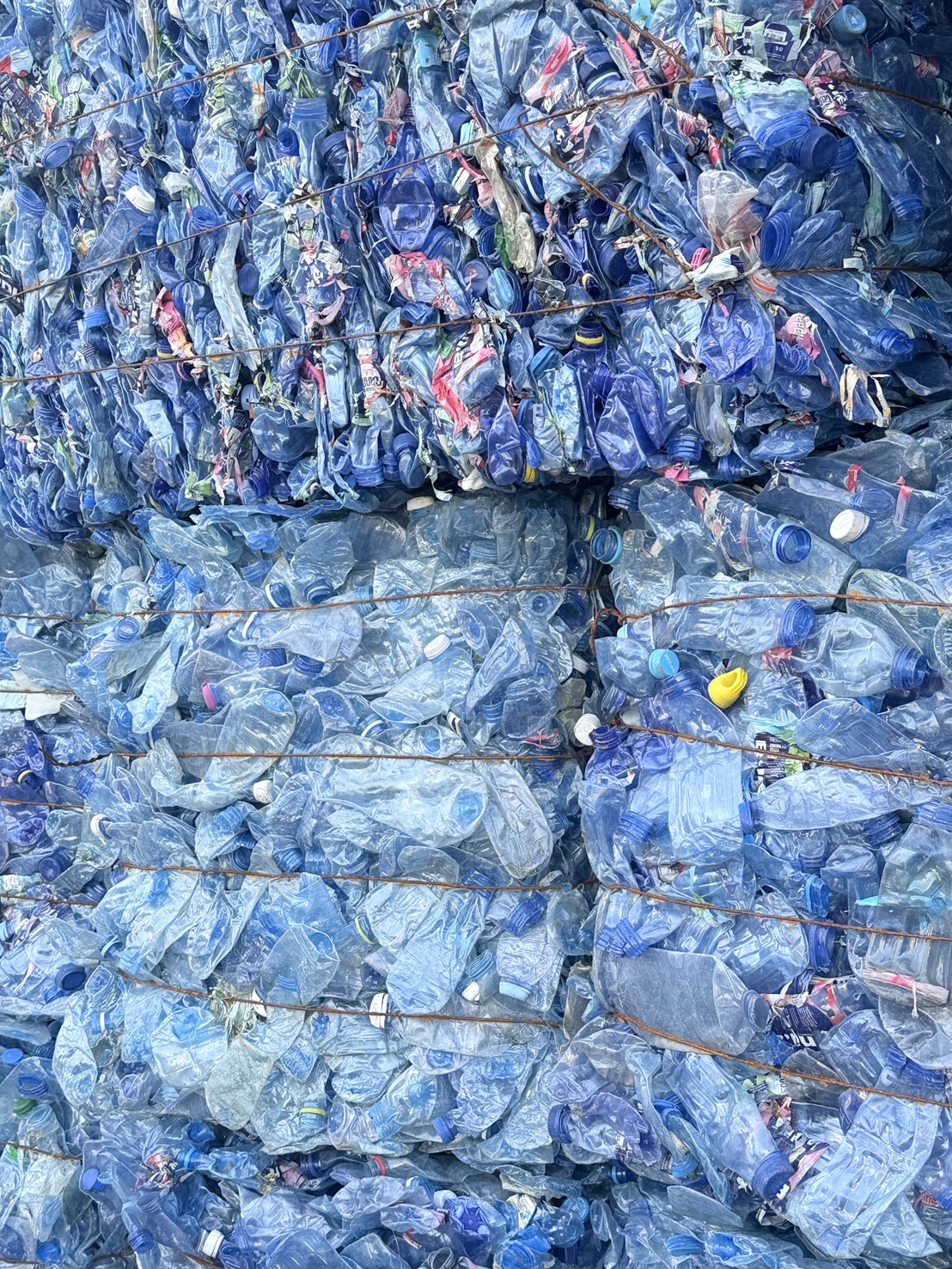
For recycled polyester, PET waste such as post-consumer plastic bottles may be collected, sorted, cleaned, and processed into flakes or other suitable feedstock.
Recycled polyester is still predominantly produced from plastic bottles. Textile Exchange reported that 97% of recycled polyester produced globally in 2025 came from plastic bottles.
The prepared polyester material is melted under controlled conditions.
Next, the molten polymer is extruded through small openings in a spinneret, forming long continuous filaments.
After extrusion, the newly formed filaments are cooled and solidified.
They are then drawn to develop the required fiber characteristics. This stage helps control properties that will affect the performance of the finished polyester fiber.
The continuous fibers can then be crimped to create the required structure and bulk.
Afterward, they are cut into specified lengths. At this point, the continuous filament becomes polyester staple fiber.
Depending on the product specification, additional finishing may be applied. The finished PSF is then collected and compressed into bales, allowing it to be stored and transported efficiently.
Importantly, recycled-polyester production does not always follow exactly the same route. Textile Exchange’s recent polyester life-cycle research includes both recycled PET chip production and a flake-to-staple-fiber process that bypasses chip production.
PSF can be classified in several ways. However, buyers commonly encounter differences in fiber structure and surface treatment.
Solid polyester staple fiber has a solid cross-section and can be used in various textile and nonwoven applications.
Depending on the selected specification, solid PSF may be used for nonwoven materials, carpet felt, geotextiles, padding, insulation, and other industrial applications.
Hollow polyester staple fiber contains a hollow structure within the fiber.
This structure can provide greater bulk and volume, making hollow fiber particularly useful for products in which softness, loft, and filling volume are important.
As a result, hollow PSF is commonly considered for applications such as pillows, cushions, quilts, mattresses, and other filling products.
PSF can also be supplied as siliconized or non-siliconized fiber.
Siliconized fiber is treated with a silicone-based finish that changes its surface characteristics. Consequently, the fibers can move more easily against one another, which can help create a smoother and softer filling.
Non-siliconized fiber does not receive the same silicone treatment and may be selected when different handling, bonding, or performance characteristics are required.
The appropriate option should therefore be selected according to the customer’s manufacturing process and final product requirements.